

By Camp Crusty Team
Spring in Bright Victoria might be the region's most underrated season. The snowmelt fills the rivers and waterfalls, the hills turn green, and the walking weather is just about perfect, all before the summer crowds arrive. September through to November offers a rare window when the High Country shakes off winter, the rivers run fast and clear, and you can still find a quiet spot along the Ovens River without having to stake your claim at dawn. It's the kind of season that rewards slow mornings and long afternoons outside, and the park sits right in the middle of it all.
The climate in spring is reliably mild, with daytime temperatures sitting between 15 and 22 degrees and nights cool enough to make a campfire worthwhile. Rain is possible but rarely lingers, and the clear days that follow bring out the best in the alpine light. You'll want layers for the early starts, but by mid-morning you're usually down to a t-shirt. It's shoulder season, which means lower rates, better availability, and a pace that feels more like regional Australia than a resort town.
Waterfalls at their best
Spring snowmelt sends the High Country waterfalls into full flow. The falls around Mount Buffalo and the cascades along the alpine roads are at their most dramatic in the weeks after the thaw. Eurobin Falls, just a short drive from the park, runs hard from late September through October, and the walk in takes you through tall forest still damp from the melt. Crystal Brook Falls, further up the mountain, is another one worth the trip when the volume's up. You'll hear it before you see it.
Chalwell Galleries, closer to town, is an easier option for families or anyone after a short walk with a decent payoff. The falls drop into a deep pool surrounded by moss-covered rocks, and in spring the flow is strong enough to feel the spray from the viewing platform. It's a popular spot, but early morning or late afternoon usually gives you the place to yourself. The track is well formed and suitable for most fitness levels, and the return trip takes around 40 minutes at a steady pace.
If you're willing to drive a bit further, the waterfalls along the Great Alpine Road between Bright and Mount Hotham put on a show in spring. There are pull-offs every few kilometres where you can stop and take in the cascades that run down the roadside cliffs. Some are named, most aren't, but all of them are fed by snowmelt and all of them are worth a look when the conditions are right. Pack a thermos and take your time.
Perfect walking weather
Mild days and cool nights make spring ideal for getting out on foot, from gentle riverside strolls to the longer climbs on Mount Buffalo before the summer heat sets in. The Canyon Walk at Mount Buffalo is one of the best day hikes in the region, and spring is the time to do it. The wildflowers are out, the views are sharp, and you won't be fighting the January heat or the Easter crowds. The loop takes around five hours, and the granite formations along the rim are worth every step.
Closer to the park, the Ovens River track offers an easy walk that follows the water through open forest and farmland. It's flat, shaded in sections, and accessible year-round, but spring brings the riverbanks to life. Wattles bloom along the edges, the grass is thick and green, and the birdsong picks up as the weather warms. You can walk as far as you like and turn back when you're ready. Dogs are welcome on lead, and the track is wide enough for prams in most sections.
Mount Porepunkah, just outside Bright, is another spring favourite. The climb is steady rather than steep, and the summit gives you a clear view across the valley to Mount Buffalo and the surrounding peaks. Wildflowers carpet the lower slopes in October, and the mix of native grasses and flowering shrubs makes the climb feel more like a garden walk than a mountain trek. The return trip takes around two hours, and there are plenty of spots to stop and catch your breath on the way up.
For something shorter, the Centenary Trail through Bright is an easy riverside loop that connects the town's parks and picnic areas. It's paved in sections, mostly flat, and takes around 90 minutes if you stop for coffee along the way. Spring is the best time to walk it, when the trees are in full leaf and the river is high enough to drown out the road noise. The park is less than five minutes' drive from the trailhead, so it's an easy one to fit in before breakfast or after check-in.
Gardens and green hills
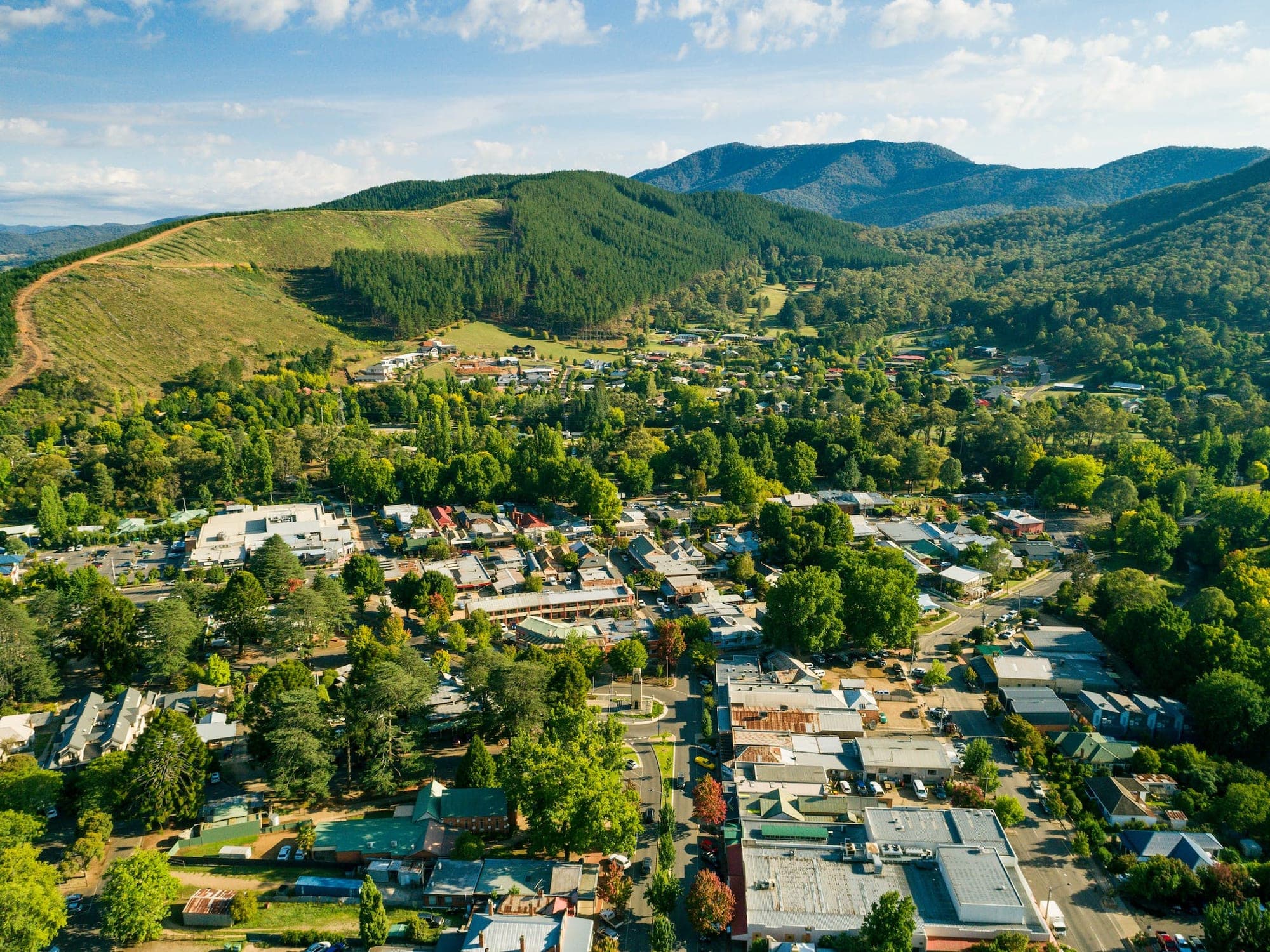
The Ovens Valley turns brilliant green in spring, and Bright's tree-lined streets fill with fresh growth. It is a quiet, restorative time to visit, with plenty of room to breathe. The exotic trees that line the main street, planted over a century ago, leaf out in waves of lime green and copper, and the parks around town fill with flowering bulbs and early blossoms. It's not showy, but it's worth slowing down for.
The farm country around the park shifts from brown to green almost overnight once the spring rains arrive. Cattle return to the high paddocks, the hay crops come in thick, and the whole valley takes on a softness that's absent in the harder months. You'll see it from the road, but it's better on foot or from a bike. The back roads around Porepunkah and Rosewhite are quiet, flat, and lined with old farm gates and poplars that frame the hills beyond.
Bright's community gardens, near the showgrounds, open to visitors in spring and are worth a look if you're interested in what grows well at altitude. The volunteer-run plots produce everything from heirloom tomatoes to alpine herbs, and there's usually someone around happy to talk soil and seasons. The gardens are free to visit, and the adjacent parkland has picnic tables and a playground if you're travelling with kids.
Wildflowers are another spring drawcard, particularly on the higher trails around Mount Buffalo. Trigger plants, billy buttons, and alpine daisies appear in clusters along the walking tracks, and the grasslands near the Chalet turn yellow with everlastings by late October. You don't need to be a botanist to enjoy it, but if you are, the variety is impressive. The flowers are small, hardy, and often easy to miss unless you're paying attention, which is another reason to take your time.
Spring also brings the region's gardens and nurseries to life. Simmons Reef near Bright specialises in cool-climate plants and usually has a good selection of alpines and perennials in flower by September. The staff know the region and can tell you what'll survive a High Country winter if you're thinking of taking something home. There are a few other nurseries scattered along the valley, most of them small, family-run operations with stock you won't find in the chain stores.
Ready to make Bright your base? Browse our cabins, villas and powered sites and lock in your dates.