
By Camp Crusty Team
You're looking at one of Victoria's oldest national parks, and honestly, it's still one of the best for a day walk. Mount Buffalo sits up on a granite plateau about 1,700 metres above sea level, and when you're standing on the edge looking back towards the Ovens Valley, you'll understand why people have been coming here since the 1890s. The hiking trails Mount Buffalo National Park offers range from twenty-minute strolls to full-day slogs, so you can pick what suits your legs and your schedule.
The park's about three hours from Melbourne, a bit less from Albury. You'll wind up through Porepunkah and Bright, then the road climbs through snow gum country until you're on top. It's worth filling the tank before you head up. The drive itself takes about forty minutes from Bright to the plateau, and you'll gain over a thousand metres in elevation, so your ears will pop. There are a few lookouts on the way up if you want to stop and take it in.
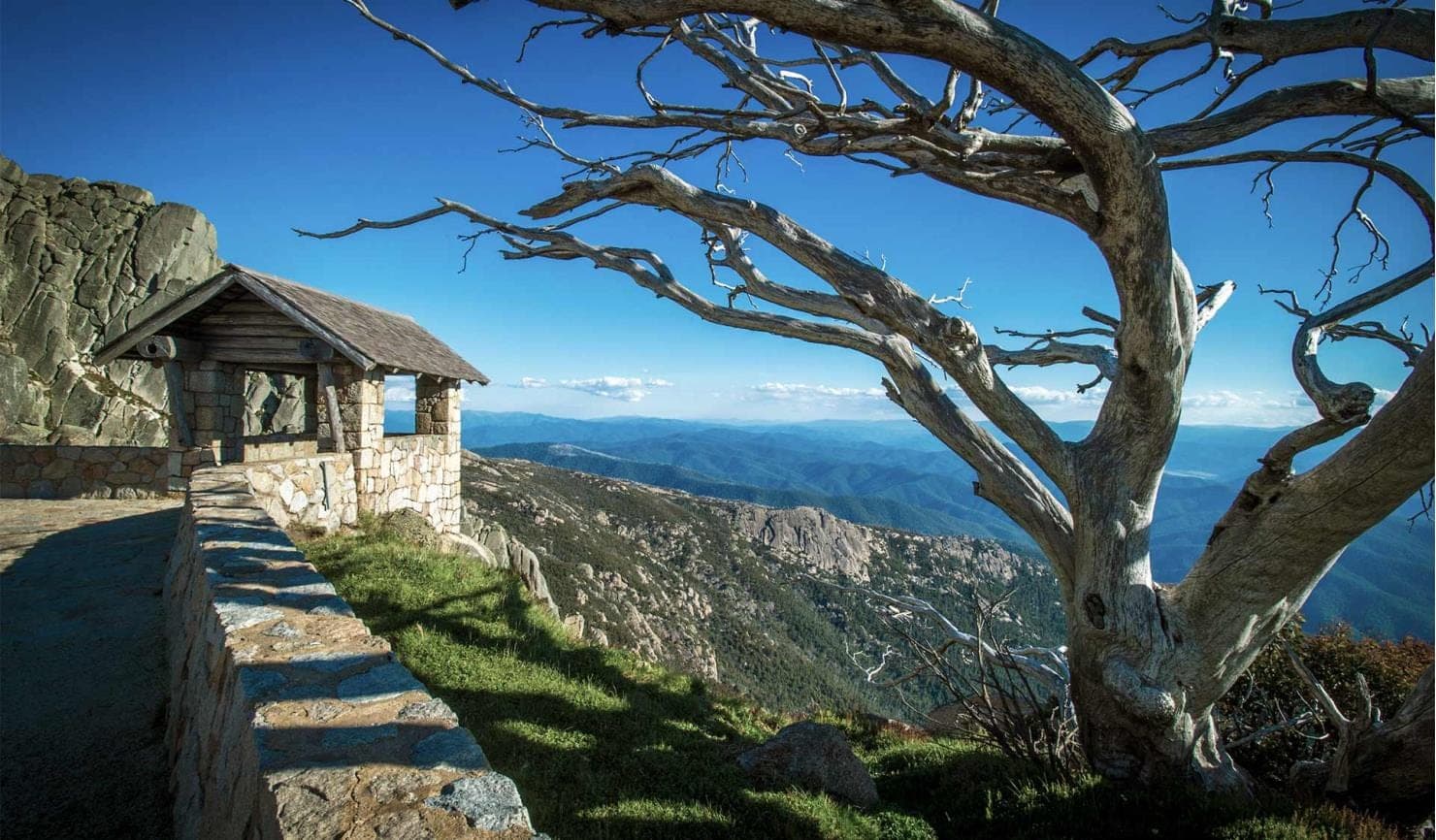
The plateau itself is a big slab of granite that's been weathered into tors, boulder fields, and shallow basins. It's why the landscape looks different to the forested ranges around it. You get open slabs, weird rock formations, and pockets of alpine vegetation that wouldn't survive lower down. The whole place has a bit of a moonscape quality in spots, which makes the walking more interesting than just trudging through bush.
Most people start near the old Chalet. It's closed now, but the car park's still the trailhead for half a dozen walks, and there's a toilet block that's usually open. From here you can do the Gorge walk, which is the gentlest option we've got. It's a wide gravel path, maybe a kilometre return, and it takes you to a lookout over the Gorge itself. Kids handle it fine. You're looking straight down into a sheer-sided valley with the Buffalo River way below. In spring you'll see wildflowers along the edges, mostly guinea flowers and little white everlastings. There's a bench at the lookout if you want to sit for a bit, and interpretive signs that explain how the gorge formed. It's a good warm-up walk if you're deciding whether to tackle something longer.
If you want something a bit longer but still pretty manageable, the Eurobin Falls track is a good shout. It's about 4.5 kilometres return from the Cresta Valley day-use area, dropping down through snow gum forest to a waterfall that actually runs most of the year. The track's well-maintained but it does go downhill, which means you've got a bit of a climb on the way back. Budget about two hours return. We've seen families with primary-school-aged kids do it without too much drama. The falls themselves drop about fifteen metres over a granite face, and there's a viewing platform at the base where you can feel the spray if it's been raining. The pool below is deep and cold, and yes, people do swim in summer, but you'd want to be keen.
Another middle-ground option is the Crystal Brook Falls walk, which starts from the same area as Eurobin. It's a bit shorter at about three kilometres return, and the gradient's gentler. The track follows the creek for most of the way, crossing it a couple of times on log bridges. You'll end up at a smaller waterfall that tumbles into a series of pools. It's quieter than Eurobin, mainly because fewer people know about it. The track can be muddy after rain, so boots are a better bet than runners.
Now, the proper stuff. The Hump is the highest point in the park at just over 1,700 metres, and the walk up from the Chalet area takes about three hours return. It's not technical, you don't need ropes or anything, but it is a steady climb and the last section's over granite boulders. Wear actual boots. The track's marked with poles, which you'll appreciate if cloud rolls in, because it does that. At the top you've got 360-degree views when it's clear: the High Plains to the east, the Ovens Valley below, sometimes you can see across to the Snowies if the air's clean. On a windy day up there you'll need to brace yourself, and if there's weather coming in you'll see it rolling across the valley towards you. It's the kind of walk that makes you feel like you've actually done something.
Hiking trails Mount Buffalo National Park: what you need to know before you go
The weather up here doesn't mess around. It can be twenty degrees in Bright and six degrees on the plateau, with wind that'll go straight through a cotton jumper. Even in summer, bring a windproof layer and a beanie. We've had people turn up in January in shorts and a singlet, then spend the walk shivering. Don't be that person. The temperature drops about a degree for every hundred metres you climb, and the wind chill on top of the plateau can make it feel another five degrees colder. If you're planning a longer walk, check the Bureau of Meteorology forecast for Mount Buffalo specifically, not just the valley towns. The weather can change in an hour up here.
Water's another thing. None of the trails have taps once you leave the car park, and even though the Buffalo River runs through the park, you'd want to treat it before drinking. Carry at least a litre per person, more if it's warm or you're doing the longer walks. On a hot day doing the Hump, you'll want two litres. There's no shame in carrying extra and not needing it.
In winter, forget it unless you've got proper snow gear and experience. The plateau gets absolutely dumped on, and the walking tracks disappear under a metre or more of snow. Parks Victoria closes the summit road when it's unsafe, usually from June through to September, sometimes longer. If you're keen on snow hiking, you'll need to check conditions and probably bring poles and microspikes at minimum.
The Monolith's worth a mention. It's a big granite tor that you can scramble up, and the track from the Chalet area's about an hour return. There's a bit of a rock scramble at the end, nothing crazy, but you're using your hands. The view from the top takes in the whole northern edge of the park. On a clear autumn day, with the snow gums turning gold and red, it's the kind of thing you'll remember.
For something a bit different, try the Reservoir walk. It's not on everyone's list, which is part of the appeal. It's about 2.5 kilometres return from Dingo Dell, mostly flat, and it takes you around the edge of the old reservoir that used to supply the Chalet. You'll walk through snow gum woodland and across open granite slabs. It's quiet. You might see a wallaby if you're out early or late. The granite slabs can be slippery when wet, so watch your step, and if it's icy in the morning just give it an hour or two for the sun to do its work.
Wildlife's around if you're paying attention. Wallabies are common, especially around dawn and dusk near the campground and picnic areas. You'll hear currawongs and gang-gangs in the snow gums, and if you're lucky you might spot a wedge-tailed eagle riding the thermals above the cliffs. There are wombat burrows all over the plateau, though the wombats themselves are mostly nocturnal. Snakes are less common up here than in the lowlands, but they're still about in summer, so just watch where you're putting your feet in the long grass.
If you're staying overnight, there's the Cathedral and the Hump as a longer circuit. It's roughly twelve kilometres and you'd want to give yourself five or six hours. The track goes through subalpine woodland, crosses open granite, and passes several tarns that sit in shallow depressions on the plateau. In summer they're ringed with grass and tiny alpine daisies. It's proper Victorian alpine hiking, and you'll earn your beer at the end.
A couple of practical bits: there's no mobile reception once you're on the trails, so download your maps beforehand or bring a paper one. Parks Victoria's website has track notes and a printable map. The park entry fee's about $9 per car per day, or you can grab an annual pass if you're planning to come back. There's a self-service pay station at the main entrance. Bring coins or a card, and keep your ticket on the dash. They do check, especially on weekends and public holidays.
The best time to visit's probably late spring or autumn. November through December you'll get wildflowers and everything's green. March through May the snow gums turn colour and the crowds thin out. Summer's fine too, just hotter and busier, especially on long weekends. We get quite a few rock climbers in summer as well, so you'll see them heading off towards the bluffs with ropes and chalk bags. The climbing's apparently some of the best granite in the state, though you'd have to ask them about that.
If you're camping, there's a designated campground at Lake Catani, down near the base of the plateau. It's got toilets, fireplaces, and tank water. No showers, but it's a solid base for exploring the hiking trails Mount Buffalo National Park's known for. Sites are about $35 a night for a family. Book ahead in peak season because it fills up. The lake itself is worth a look, it's a small glacial lake that's good for a paddle or a swim if you don't mind cold water. There are a few short walks around the lake edge that are good for kids or an evening stroll after dinner. The campground's about ten minutes' drive from the Chalet area, so it's handy for getting an early start on the longer walks.
Track maintenance is generally pretty good. Parks Victoria does regular work on the main trails, clearing fallen timber and fixing erosion. That said, after big storms you might find branches down or washouts, especially on the steeper sections. If a track's closed, there'll be signs at the trailhead. Don't ignore them. The closures are usually for a reason, like rockfall or unsafe bridges, and going around the signs just makes things harder for the rangers.
One last thing: the park's on traditional Taungurung land, and some of the rock formations and sites have cultural significance. Stick to the marked trails, don't climb anything that's signposted as off-limits, and take your rubbish out. It's a small thing but it matters.
Related: Mount Buffalo National Park, Mount Buffalo National Park, Mount Buffalo National Park
Mountain Peaks
The Horn's the big one here, sitting at 1,723 metres and offering views that stretch all the way to the alps on a clear day. You can drive most of the way up, but the hiking trails Mount Buffalo National Park has laid out around the summit are where you'll actually feel like you've earned it. Cathedral and The Hump are worth the climb too if you're after something quieter.
Explore
What makes this place work is the variety. You'll find granite tors that look like they've been stacked by hand, creeks that run year-round, and snow gum forests that smell different to the eucalypts down below. Pick a trail in the morning, see what you find, then hit another one after lunch. It's the kind of park where you'll want to come back.